
Sandvik Coromant Profiling Geometries Provide Process Security
Sandvik Coromant expands its Corocut 2 portfolio with geometries tailored for profiling in demanding materials and for parting-off operations that require greater process reliability and productivity.


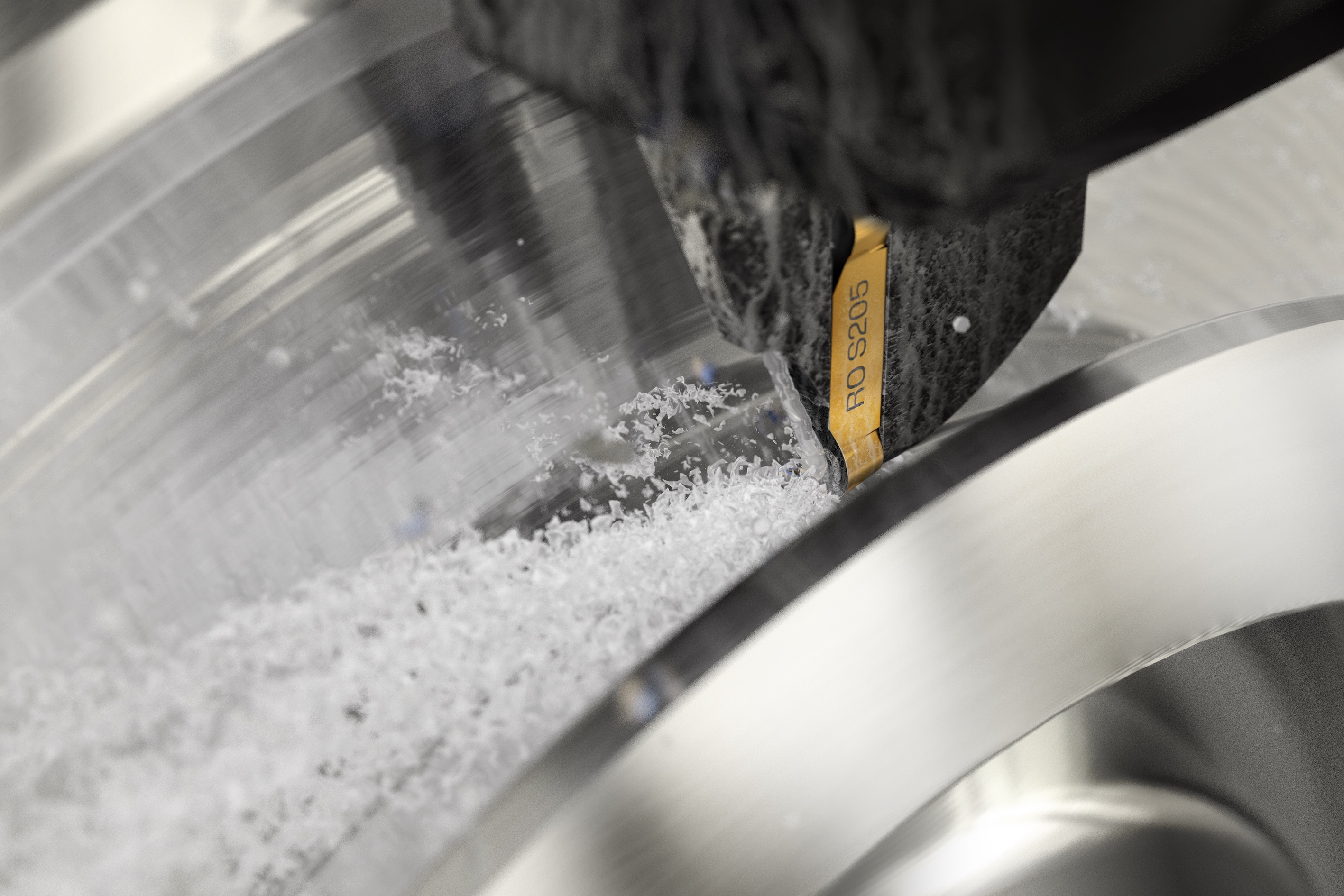
Sandvik Coromant launches four enhanced insert geometries within its high-performance CoroCut 2 parting and grooving platform. The launch includes the ground profiling geometry -RO for nickel-based heat-resistant super alloy (HRSA) materials, alongside three upgraded parting-off geometries -CF, -CS and -CR, which reduce pips and burrs as well as improve edge-line quality.
CoroCut 2 is designed to provide quality, efficiency and process security across a wide range of applications, helping workshops increase output while reducing energy consumption and material waste. This latest development expands the portfolio with geometries tailored for profiling in demanding materials and for parting-off operations that require greater process reliability and productivity.
The ground profiling geometry -RO, well suited for finishing operations in nickel-based HRSA materials, has been upgraded to the CoroCut 2 range. New insert grades and a stabilizing rail interface improve wear resistance and dimensional accuracy, enabling tight tolerances and consistent surface quality.
In addition, three parting-off geometries have been enhanced or added to the range, including:
- Geometry -CF: A positive, light-cutting geometry updated with the CoroCut 2 grades and FlashLight technology, providing low cutting forces and optimized edge-line quality
- Geometry -CS: A ground geometry with a front angle and sharp edge that minimizes pips and burrs, now supported by a rail interface for added stability
- Geometry -CR: A versatile geometry with a new front angle that reduces pips and burrs across a wide range of materials.
The CoroCut 2 range includes tools and inserts for parting-off, external and internal grooving, face grooving and profiling — from roughing to finishing. Designed for use with two-edged inserts across all ISO materials and applications, it’s a versatile, sustainable and cost-efficient tooling concept for high-demand production environments.
Related Content
-
Know Your Knurling
Understanding some knurling basics will enable you to choose the proper tooling system based on application requirements.
-
Piezoelectric Sensor Technology: Moving Toward more Efficient Machine Monitoring
A new system that uses simple and compact force or strain sensors, which can be integrated inside toolholders or mounted on surfaces such as spindle housings, can facilitate CNC machine monitoring.
-
Data Matrix Codes Offer Cutting Tool Traceability
A company’s quest to discover errors in a manufacturing process has led to printing data matrix codes on its cutting tools that provide a wealth of information for both the user and this cutting tool manufacturer.


