
IMCO Carbide Tool Inc. End Mills for Faster Part Cycles
The M936 Pow-R-Feed series is designed to make various toolpath moves without slowing down, providing faster cycle times and more production.


IMCO Carbide Tool Inc. has developed the M936 Pow-R-Feed series of end mills to enable faster part cycles and speeds, regardless of the machining stations’ horsepower.
The M936 is designed to maximize the output of machines most customers use, according to Steve Avers, IMCO’s technical support manager. With conventional low-horsepower machines, this free cutting action means the M936 cutter can run to the machine’s upper capacity limits.


Users can reportedly make various toolpath moves without slowing down, providing faster cycle times and more production. When a five-axis machine can swing an end mill around in all directions without clogging, the machinist can complete the operation with one chucking, saving time.
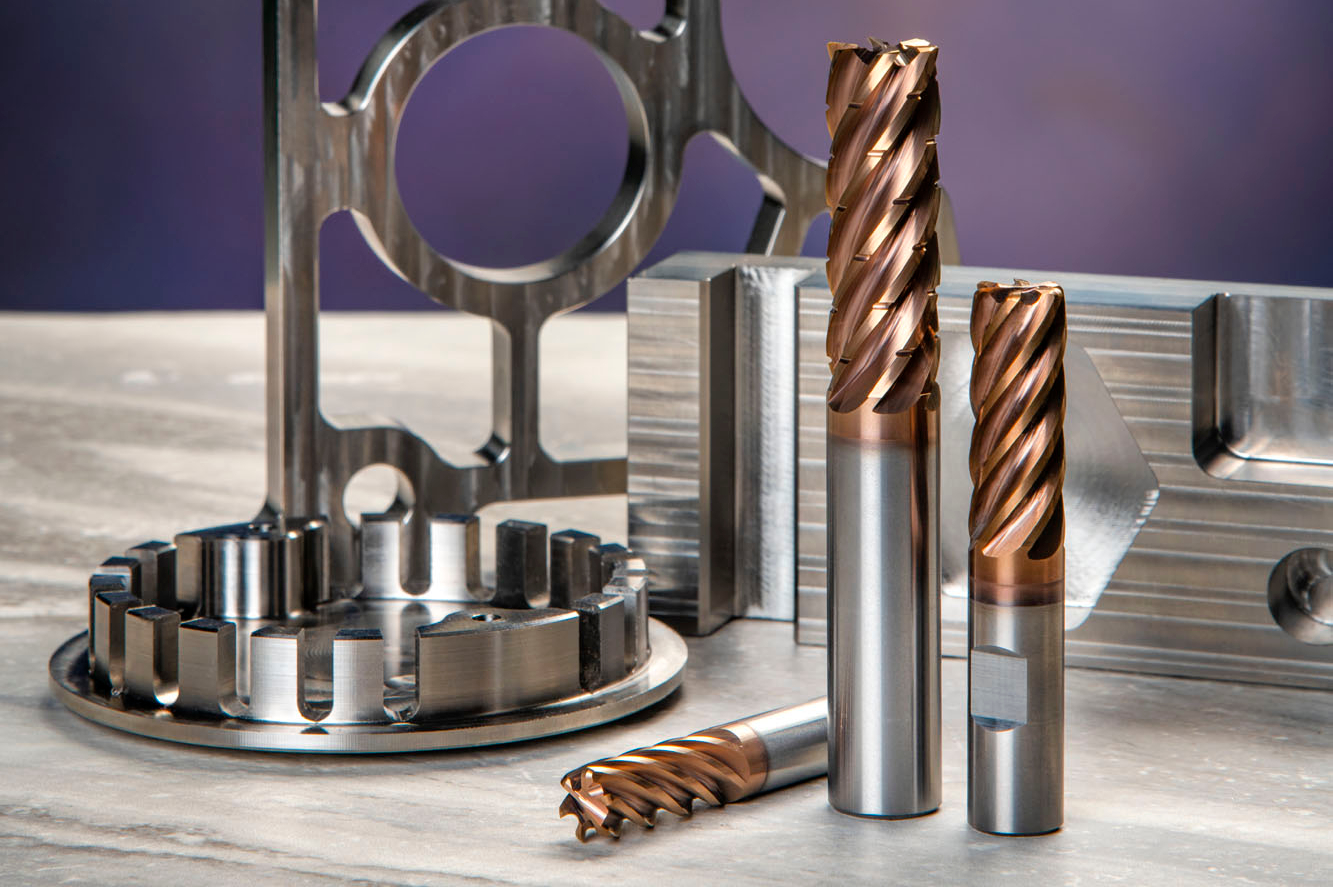
The flute and core geometries are said to achieve aggressive cutting parameters, and the proprietary end face enables aggressive ramping and helical entry parameters. A tough carbide core and a modern AlTiSN smooth coating prevent chip buildup and enable higher feeds and metal removal rates.
According to the company, tool life is exceptional due to the variable helix and variable index effects on vibration damping, as well as the specially engineered carbide grade and coating.
“This is the cutter for any programmer machining steels, stainless steels and titanium on three-axis to five-axis CNC machining centers that wants to run fast and helical enter, ramp, slot and peripheral mill at fantastic feed rates,” says Matt Osburn, IMCO vice president and technical director. “The M936 is designed for very aggressive traditional tool paths, stepovers and depths beyond the reach of any of the industry’s legacy tools. It’s IMCO’s free-est cutting end mill in steels to date.”
Related Content
-
Parting Off: The Case for Standardizing on Sawing
The value of rotary saw cutting for parting off operations could boil down to simple economics paired with process efficiency gains.
-
The Ins and Outs of Inserts
Understanding how inserts are made provides valuable insight into how their performance can be optimized.
-
Tool Path Improves Chip Management for Swiss-Type Lathes
This simple change to a Swiss-type turning machine’s tool path can dramatically improve its ability to manage chips.


