
Machine Monitoring Software Update for Improving Efficiencies
Dashboard additions display how many cycles were done on previous shifts, the machine monitoring timelines of previous shifts and a pie chart of the machine utilization for the current shift.


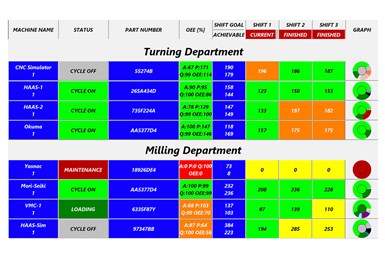
Detailed graph monitoring dashboard. Photo Credit: eNet Monitoring and DNC
The eNet Monitoring and DNC machine monitoring software updates — eNET V9.1 and eNET LT V5.1 — include two new machine monitoring dashboards (detailed timeline and detailed graph) which display the shift goal for machine cycles that can be accomplished per shift, and the achievable cycles that can still be completed on the current shift. The dashboards also display how many cycles were done on previous shifts, the machine monitoring timelines of previous shifts and a pie chart of the machine utilization for the current shift.
The new software versions also provide improvements to the legacy machine monitoring dashboards, as the interface code has been refreshed to operate even faster and enable more visual customizations of the dashboards, the company says. It is said a new API that is over 200% faster has been added to talk to eNET partner softwares. The SQL interface has also been refreshed to improve ease-of-use and offer more features.
The software updates are available for all eNet machine monitoring customer as a complimentary download from the company’s website, as eNET Customers can utilize free software updates and phone support without yearly maintenance fees.
Related Content
-
Labor, Compliance and Sustainability Strategies
With the right tools, including ERP software, overcoming this “manufacturing trifecta” of challenges is within reach.
-
Zoller Smart Manufacturing Summit Highlights TMS Capabilities
At the 2026 Zoller Technology Days and Smart Manufacturing Summit, the company highlighted its Smart Manufacturing solutions, including tool management and data handling systems.
-
High-Production Multitasking Becoming More Flexible
Rotary transfer machines remain well-suited for high-volume production, but are now more accommodating to smaller batch sizes.


